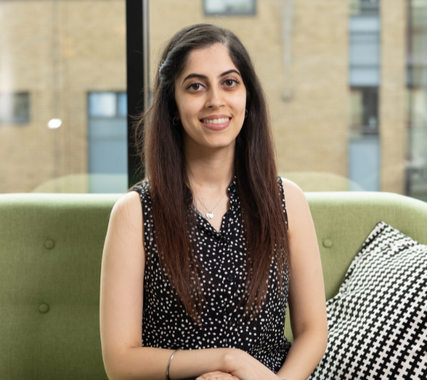
Tripta Virdee, grants manager
In our recently published 2025 impact report we shared an excerpt from this piece with our decent work programme lead, Tripta Virdee. Read the full conversation with Tripta here.
A recent working day that stands out...
A recent working day that stands out was focused on influencing the new Fair Work Agency, which is being set up to bring together fragmented enforcement of employment rights and better protect workers, particularly those in insecure or low‑paid work.
The day began with refining a briefing developed through the ELAN network, which we used as a space to bring together a coalition of organisations focused on influencing the new Fair Work Agency. Through this network, we formed the Fair Work Agency Coalition (FWA Coalition) to help shape how the Agency is designed and implemented. As a funder working on decent work, this feels like a critical moment to help will shape how effective the system is for years to come.
Later, I met with partners to sense‑check the framing against what organisations are seeing on the ground. Through the Fair Work Agency Coalition, we’ve brought together advice organisations, policy organisations and trade unions around three shared requests: that the Fair Work Agency is properly resourced to enforce employment rights, that it is a safe and trusted route for migrant workers to report abuse, and that it publishes transparent enforcement data so it can be held to account.
By the afternoon, I was coordinating feedback across the coalition and aligning the work internally with our wider Decent Work strategy. Over 25 organisations have now signed the briefing, and we hope to use it to further influence policymakers as decisions about the Agency take shape. I then had an afternoon of enquiry calls where applicants wanted to find out if they were eligible to apply for funding.
What stayed with me was how relational this work is less about individual grants, and more about creating the conditions for collective influence at a moment when organisations’ voices really matter.
Being a relational funder looks like..
One situation that really brought relational funding into focus was when a grantee lost several key staff members and began falling behind on reporting. They were under significant pressure and worried about how it would look to raise this with us. When we spoke, it was clear the delays were about keeping the organisation functioning, not a lack of commitment. Rather than framing the delayed report as an issue, we reset timelines, simplified reporting, and prioritised organisational stability. Removing the sense of pressure created space for a more open and honest conversation about what support was needed.
A time I supported an organisation in a way that wasn’t just about giving a grant...
When a funding relationship ended after an organisation successfully secured funding elsewhere, it created an opportunity to think differently about what support could look like beyond a grant. As a relatively new organisation, I felt they would benefit from mentoring through our ELAN network, which connects members of staff within an organisation with senior legal professionals such as judges and solicitors.
Two members of staff took up the opportunity. The mentoring supported their professional development and, importantly, strengthened the organisation’s capacity to access and engage with specialist legal expertise. It helped build confidence, deepen knowledge, and embed stronger connections to the wider sector.
For me, this reflected the value of relationships that extend beyond grants, where support through networks and opportunities can have a lasting impact on organisational strength and sustainability.
What people don’t see...
Much of the work happens quietly between organisations: making introductions, brokering conversations, and helping groups align around shared goals. Bringing people together at the right moment.
A moment or experience that captures why our work matters...
One moment that really stayed with me was facilitating a conversation about race and why diverse voices need to be present in decision-making spaces. I shared that these are spaces I haven’t always had access to myself. Afterwards, a few organisations told me how much it meant to see someone from a similar background in that role. They said it made those spaces feel more accessible and encouraged them to seek out opportunities they hadn’t previously felt were for them. That moment reminded me how visibility and lived experience is important.
A big part of my job is actually…
Building trust and relationships so organisations feel safe to be honest about both progress and challenge.